Handball: GB not in Poland and Sweden

Last month, the World Men’s Handball Championship took place in Poland and Sweden, with the winner qualifying for the Olympics.

However, GB did not qualify for the event. The 32 teams were:

  • The two hosts (Poland and Sweden)
  • The winners of the 2021 World Championship (which again we were absent from)
  • The top three at the 2022 European Championship (which we didn’t qualify for)
  • Fifteen from other regions
  • Nine teams from European qualification
  • Two wildcards

At the 2022 European Championships, we failed to emerge from Qualification Phase 1, coming third in our group, beating Ireland but losing to Luxembourg and Bulgaria. We went to the Emerging Nations Championship, a redemption competition, but came fourth after losing the semifinal to Georgia.

In European qualification for the 2023 Worlds, we came bottom of our first group, losing to Finland, Estonia, and Georgia.

In the end, Denmark were crowned world champion. Our next chance is at the 2024 European Championship, but we decided to not enter qualifying for this tournament. Therefore, the men’s team can formally rule themselves out of the Olympics in 2024. However, the path seems bright as they have got past the first 2026 qualifying stage, topping a group with Azerbaijan, Cyprus, and Malta.

Some Olympic updates

Hello GB Games readers, and sorry for the absence. I decided to take some time off this blog for a couple of reasons, those being a vague busyness, especially with my visit to Qatar for the World Cup, and the fact that there weren’t any Olympic qualifier events anyway, apart from the BMX Freestyle World Championship. Some things have happened in that time, including a few qualification systems being updated.

Athletics

Athletics was the only sport left to release its qualifying system, and now it has done so. With a total of forty-eight events, there’s more spaces in this sport than any other. The events are split into categories. On the track, there is the Men’s 100m, 200m, 400m, 800m, 1500m, 5000m, 10,000m, 110m Hurdles, 400m Hurdles, 3000m Steeplechase, 4x100m Relay and 4x400m Relay, with the same list for women apart from the 100m Hurdles substituted for the 110m Hurdles, as well as a Mixed 4x400m Relay, on the field there is for both men and women the High Jump, Pole Vault, Long Jump, Triple Jump, Shot Put, Discus Throw, Hammer Throw, and Javelin Throw, with combined events being a Men’s Decathlon and a Women’s Heptathlon. On the road there is a 20km Race Walk and Marathon for both genders as well as a Mixed Team 35km Race Walk. This is the same programme as Tokyo 2020, apart from the Men’s 50km Race Walk being replaced by a Mixed Team Race Walk. Overall, there is a reduction in places: in Tokyo, there were 988 men and 912 women: in Paris there will be 905 of each gender. For track events, there will be 56 in the 100m, 48 in the 200-800m, 45 in the 1500m, 42 in the 5000m, 27 in the 10,000m, 40 in the hurdles events, 36 in the steeplechase, and 16 teams in each relay. On the field, there will be 32 in each event, and 24 in both combined events, with 48 in each individual race walk, eighty in both marathons, and 25 teams in the mixed race walk. There are at most three per NOC in individual events, and one team per NOC in relay events, apart from the mixed race walk (at most two per NOC).

For individual events, there is a system where achieving the Entry Standard earns 50% of the places and the other 50% are based on World Rankings. The period to get the standard is from 1 July 2023-30 June 2024, apart from the 10,000m, combined events and race walks, where the period starts on 31 December 2022, and the marathon, where it starts on 1 November. For the marathon, this will only apply to 20% of the criteria, with a special Road to Paris List of 30 January 2024 instead revealing the top 65 places. For relay events, the World Athletics Relays 2024 (in Q2, host tbc) will have the top fourteen teams and the others will qualify based on the World Athletics Performance List, with the same dates as the 10,000, combined events and race walks into consideration. Any NOC still not to qualify also gets a place.

So, this system is basically the same, and the athletics heads can debate the standards, but anyway for all our problems and faults in this area, I think qualification won’t be an issue. I actually think British athletics is in an alright place right now anyway, and we should be fine.

Some other sports have updated their systems:

Boxing

In Boxing, the system has been changed completely, with continental qualifiers now the main qualifying system. For Europe, these are the 2023 European Games (Krakow, POL, 23 Jun-2 Jul 2023), which will earn four spots in every event, apart from the Men’s 51kg, 92kg, and 92+kg, and the Women’s 75kg, where it yields two. Then, a World Qualification Tournament (Q1 of 2024) will yield four in every event, while a Second World Qualification Tournament (Q2 of 2024) will yield four in every men’s event, apart from the 57kg and 80kg (where it yields two) and three in every women’s event apart from the 60kg (two) and the 75kg (four). There are host places in most events (all bar the Men’s 51kg, 92kg and +92kg and Women’s 75kg) which would be reallocated to that second WQT too if not claimed.

Canoe Slalom

In Canoe Slalom, all references to “Extreme Kayak” have been replaced with “Kayak Cross”.

Football

Football announced which events will be European qualifiers for the Olympics: for men, the 2023 European Under-21 Championships (Various cities, GEO/ROU, 21 Jun-8 Jul 2023) and for women, the UEFA Women’s Nations League (further details tbc).

Modern Pentathlon

Modern Pentathlon announced the locations of some events, including the 2023 World Cup Final (Ankara, TUR, 31 May-4 June 2023), the European Games as the European qualifier, and the date of the 2023 World Championships (Bath, GBR, 21-28 Aug 2023).

Road Cycling

They confirmed the deadline for the ranking as 17 October 2023.

Takewondo

Taekwondo revealed the dates for the European qualification tournament (Berlin, GER, 1-2 Mar 2024).

This means that now every qualification system is revealed. Let’s look forward to 2023 then, although there won’t be two many events in the early months.

BMX Freestyle: GB miss out on qualification spots in Abu Dhabi

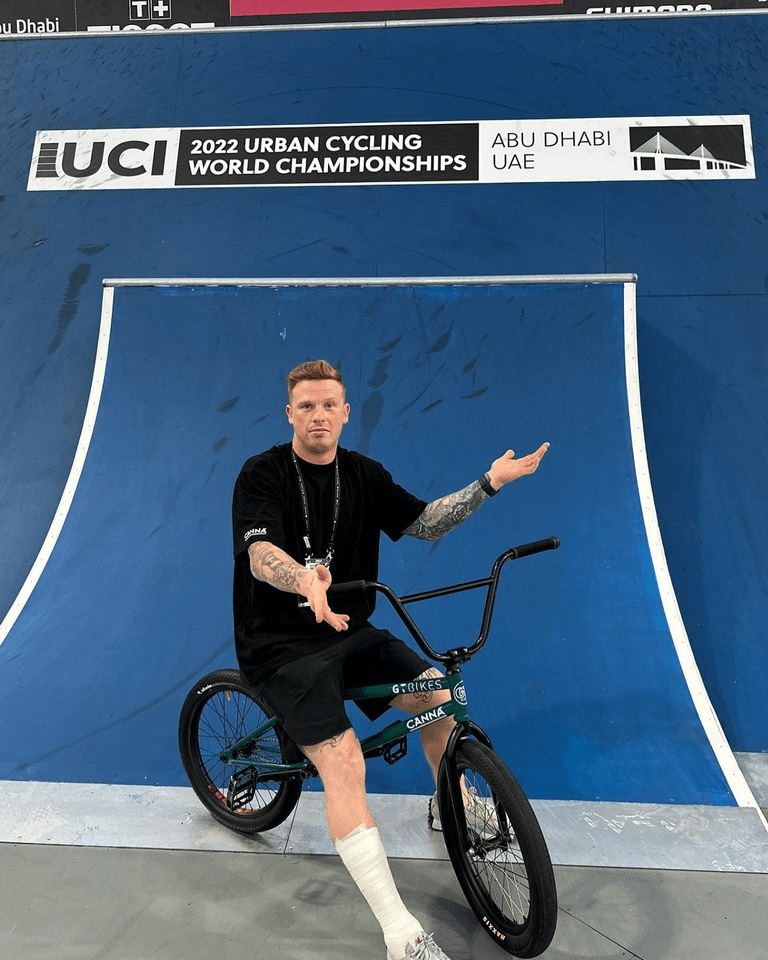
The first qualification event for the sport of BMX Freestyle to the Paris 2024 Olympic Games has taken place. The 2022 Urban Cycling World Championships in Abu Dhabi, one of the United Arab Emirates saw two places up for grabs for both genders in the BMX Freestyle Park Contest. The venue was set up on the Corniche Road, which is a “manicured waterfront” according to Abu Dhabi’s tourism website. While this was the first event chronologically, it is not the first hierarchically, meaning that we would not know the exact winners of the quota until after the event. In fact, places are reserved for continents not represented following the Olympic Qualifier Series (March-June 2024), adding further confusion. There was the additional caveat that both places couldn’t be claimed by an athlete from the same country. Therefore, a big asterisk will need to be put next to this event for now.

That said, Great Britain went into this event hoping to give themselves the best chance possible. Five Brits entered on the men’s side, in order of appearance these were: Ashley Finlay, youngster Dylan Hessey, Shaun Gornall, James Jones (who went to Tokyo 2020 as a reserve) and Kieran Reilly, who won silver at the European Championships in Munich in August.

Each rider (there were sixty in all) would have two runs, with the average leading to a final score, and twenty-four advancing to the semifinal. Reilly was the top-performing Brit in fifth with 84.15 (84.50/83.80), for a total of 84.15, with Gornall on 78.51 (78.80/78.22) in fifteenth and Finlay on 74.51 (74.50/74.52) in twenty-first also qualifying. Hessey just missed out in twenty-sixth with 72.66 (70.92/74.40), while Jones did not start, posting on Facebook that he “did the ligaments in my ankle/leg” along with a photo of him looking rather disappointed to see this opportunity pass him by.

Still, three Brits were in the semis, and this time there would be a different format, with only the top run of the two counting as twenty-four would become twelve. Reilly found an 89.28 in his first run, and though he followed it with a 53.40 it was enough for fifth. Gornall found himself under pressure after a 51..40 to begin, and a 78.70 was only enough for sixteenth, while Finlay’s 75.40 in the first round wasn’t bettered by his second (61.40) and he finished eighteenth. So only Reilly was in the final, with the same format. In the first run he could only produce a 55.60, but his second he got a creditable 80.10, still only enough for tenth and not near Olympic qualification. Still, he is obviously a great talent and one we should be excited for.

On the women’s side, we had two entrants: Sasha Pardoe, who is extremely exciting, being just sixteen but coming sixth in Munich, and Tokyo Olympic champion Charlotte Worthington. With just twenty-five entering, the qualification would be straight to the final: an average of two runs and the top twelve advancing. Worthington had no issues, with 82.60 (83.20/82.00) enough for second, while Pardoe had to settle for eighteenth with 50.55 (47.70/53.40). In the final (where only the top run counted), Worthington started with a decent 77.56, but her second run was a failure, granting 14.70, and she finished fifth. There should be no trouble for her qualifying, but she’ll be disappointed, which is of course a great motivator for improvement.

I’m not worried about Britain’s BMX Freestylers this cycle, let’s hope they find their groove at other events. The next chance is the Cycling World Championships in home soil on Glasgow in August.

The curious case of British handball

Handball is a sport that is well liked in Europe. At the Tokyo 2020 Olympics, the podiums for both tournaments (men’s and women’s) were populated solely by European countries. But there is no history of it in this country, or at least, not much of it. A GB team entered the Olympics in 2012 for both genders as hosts, came last in their groups, and then disappeared again. Kind of.

While the men’s team shows up from time to time, even coming 4th in the International Handball Association’s “Emerging Nations Championship”, the women’s team has not reared their head in a while. The 2012 Olympics was their last game that wasn’t a friendly, and showing up on the GB website shows their last game that WAS a friendly was in 2017. Perhaps the site isn’t fully updated, but it’s hard to find data to contradict it.

With the European Championship starting today, an official Olympic qualifier, it seems sad that GB didn’t even enter qualifying, where much could be learned. The next chance will be the 2023 World Championships. The good news is that GB are entering qualifying for that, with a two-legged pre-qualifying match against Turkey (for some reason, both games are in Turkey. I mean Türkiye) being their first official matches in ten years.

Sports you would never have associated with Great Britain are gaining some strength here. Baseball/Softball is a big one, and basketball and ice hockey are seeing a resurgence too, while netball has also seen its prominence rise. So why not handball? The development of an entertaining, fast-paced sport in this country can only be beneficial for everyone, being an alternative to football, rugby and cricket, and shares with those sports the lack of a need for any complicated equipment. I’m not expecting GB to beat the Turks, but playing in games regularly will provide a foundation where they can get results.

Anyone promoting a more obscure sport in such a crowded landscape and representing us abroad deserves our full support, and I wish for the best for both British handball teams and everyone connected with the sport in future.

Liverpool: Both British teams win medals and book ticket in Paris

The 2022 Artistic Gymnastics World Championships were a great success for both the men’s and women’s teams, as both have now qualified for the Olympics.

With a team qualifying, this also means the maximum of five individuals will also compete. Therefore, with over a year and a half to go to the Games, Great Britain have already qualified the maximum quotas for the sport of artistic gymnastics. The three medallists for both genders would qualify a team and five individual spots.

In the men’s event, the top eight teams (out of twenty-four) would qualify, and Great Britain would have no problems, with a total of 252.793 putting us in second. Our team was made up of Joe Fraser, James Hall, Jake Jarman, Giarnni Regini-Moran, and Courtney Tulloch. We were 9.501 points ahead of ninth-placed Germany, a sizable gap. The 15.066 on the parallel bars from Joe Fraser was the best performance from a Brit in qualifying.

In the final, the scores were wiped, with three athletes from each team competing per apparatus, and all eighteen scores being added for the final. We started on the floor, and all three of Hall, Jarman and Regini-Moran got a score higher than fourteen, with the total of 42.799 only bettered by Japan. Next was the pommel horse, where we struggled somewhat, as Fraser couldn’t keep his form and only managed a 10.466 and Hall and Jarman were in the twelves, the total of 35.232 bettered by all but Brazil and South Korea. Next was the rings, where Hall and Fraser put in respectable showings but Tulloch’s 14.666 inspired GB to a total of 42.299, bettered only by China. The vault was more mixed as GB had a middling score of 42.833, with Regini-Moran and Tulloch showing strength but Jarman penalised for a step off the mat. Next was the parallel bars, and GB managed a 43.266, only bettered by China and Japan, with Fraser breaking into the fifteens. With one rotation to go, and China and Japan in the distance, Italy were a touch ahead of GB but the Brits had the higher-scoring horizontal bar, while Italy were on the pommel horse. The Americans were not too far behind and had the floor, the highest scoring apparatus of the three to come. However, the US had the worst floor routine of anyone, removing themselves of medal contention. Italy’s pommel horse was much better than GB’s, but GB just made the gap up with a 40.800 on the horizontal bar, with Fraser, Hall and Jarman all with decent scores. Thus, GB finished on 247.229, enough for third, 1.234 points ahead of Italy in fourth.

The women were also hoping to impress, with Ondine Achampong, Georgia-Mae Fenton, Jennifer Gadirova, Jessica Gadirova and Alice Kinsella donning the Union Jack. With the top eight (of twenty-three) qualifying for the final, GB made light work in second with 164.595, 5.199 points ahead of the Dutch in ninth place. With the format the same as the men’s final, save that women compete on four apparatuses rather than six, the Achampong, Jessica Gadirova and Kinsella put in a 42.699 on the vault to start, the best of any team rather than the USA, with Achampong’s 14.366 the best a Brit managed. 40.533 on the uneven bars was a mixed result, with Kinsella impressing and Fenton also having a decent performance, but Jessica Gadirova doing well to hang on to a score of 12.800. Next was the balance beam, where Achampong and Fenton put in a very creditable score but a full from Kinsella was costly and put us in the middle of the pack with 39.299. Going to the floor, the Americans were clear champions save a miracle but the Brits seemed good value for silver and probably for a medal. Both Gadirovas and Kinsella put in a good performance with 40.832 the best of anyone apart from the US, and our 163.363 was enough for a silver medal.

Artistic Gymnastics is a feather in the cap and to have qualification finished this early is very nice indeed. Great job to all the team and we can check this off the list.

Artistic Gymnastics: GB enter World Championships in Liverpool with hope in their hearts

Great Britain’s male and female Artistic Gymnastics teams will enter a home World Championships knowing that Olympic qualification is on the line. The top three teams in both competitions will earn a place in the men’s and women’s events at the Olympic Games, which will also come with five individual spots.

Held at the M&S Bank Arena in Liverpool, which is better known for its music concerts, hosting Beyoncé, Bieber, and even a Beatle, it is the world’s very best in Artistic Gymnastics that will be hoping to attract the Scousers to the arena. Taking place from 29 October to 6 November, the team events are key for the Olympics. The Men’s event starts on 31 October with qualification, with the final on 2 November, while the Women’s event has qualification on 29 and 30 October and the final on 1 November.

The British team came fourth in the Olympics, with three of those four returning. Joe Fraser was also part of the British team that won silver at the European Championships in Glasgow in 2018, before winning World gold in the Parallel Bars in Stuttgart in 2019. In 2021, he won European bronze in Basel on the Pommel Horse, but 2022 has been his best year yet. In the Commonwealth Games in Birmingham he won three gold medals, being part of the victorious English team and winning individual gongs in the Pommel Horse and Parallel Bars, while at the European Championships in Munich he also won three golds, with the British team coming first and Fraser also becoming individual All-Around and Parallel Bars champion. James Hall also returns from Tokyo and he brings an impressive medal haul. Getting individual all-around European bronze at Cluj-Napoca in 2017, he was part of the victorious English team at the 2018 Commonwealth Games in the Gold Coast and also won individual silvers in the All-around and Horizontal Bar. He was also in the silver medal-winning team at Glasgow 2018, and the victorious English team at Birmingham 2022, where he also picked up a silver in the individual all-around. Furthermore, he was on the victorious British team at Munich 2022. Giarnni Regini-Moran also went to Tokyo, and has a big medal haul. At the 2014 Youth Olympics in Nanjing, he won three golds in the All-Around, Floor, and Vault, and two bronzes in the Parallel Bars and Horizontal Bar. At the European Games in Minsk in 2019 he won a silver on the Floor, and at Basel 2021 took home a bronze in the Vault. 2022 was his best year yet, also winning a team gold at Birmingham as well as silvers in the Vault and Parallel Bars and a bronze on the Floor competition, while in Munich he won team gold and a bronze on the Parallel Bars. Max Whitlock is the only member of our Tokyo team not to return, and has been on an extended break since the Games, but is at the championships as an ambassador. The other two members of our men’s team include Jake Jarman who has had an impressive 2022: winning four golds at Birmingham, with the team gold joining the All-Around, Floor, and Vault victories, with a team gold and a Vault gold in Munich sitting pretty alongside a Floor bronze. The final member is Courtney Tulloch, who was part of the British team that won European silver at Bern in 2016, won silver on the Rings at Cluj-Napoca 2017, and won team and Rings gold at Gold Coast 2018, as well as a silver on the Vault. He also was part of the runner-up British team at Glasgow 2018 and won bronze on the Rings, while at Birmingham 2022 defended his Team and Rings titles, also being part of the British team that won gold at Munich 2022 and winning a bronze on the Rings. He also has a gold and a bronze in the FIG Apparatus World Cup and two silvers and a bronze in the World Challenge Cup.

So this team is used to competing together then, and it is the exact team as the one that won gold in the Commonwealth Games and European Championships this year. In 2020, GB finished fourth, behind the ROC, Japan, and China, but can target a medal finish this time with no Russians present and a home crowd.

Over to the women’s side, where three of our bronze winning Tokyo team return. Jennifer Gadirova first made her name as part of the British team that won silver at the Junior World Championships in Győr in 2019, and was on the British team that won bronze in Tokyo. She was also on the British team that won silver at Munich 2022, and has a World Challenge Cup bronze to her name. Her twin sister Jessica Gadirova was also on the British team that won bronze in Tokyo, while at Basel 2021 she won Floor gold and All-Around bronze, while in Munich 2022 she was also part of the silver medal-winning team and won Floor gold. Finally, Alice Kinsella won gold on the Balance Beam at Gold Coast 2018 and was part of the silver-winning English team, while at the 2019 European Championships in Szczecin she won Balance Beam gold. Part of the Tokyo winning bronze team, at Birmingham 2022 she was part of the champion English team and also won an individual gold on the Floor. At Munich 2022 she picked up two silvers, in the All-Around and the Team event. Amelie Morgan has left international gymnastics, instead competing in the American college system and so does not return. The two other Brits include Ondine Anchampong, who has had a good 2022, winning team gold and All-Around and Floor silver in Birmingham, as well as team and Balance Beam silver in Munich, to go nicely with her Apparatus World Cup silver and World Challenge Cup bronze, and Georgia-Mae Fenton, who won Uneven Bars gold and team silver at Gold Coast 2018, team and Uneven Bars gold at Birmingham 2022, and team silver at Munich 2022, and also has a World Challenge Cup silver.

The team was behind the ROC and United States in Tokyo, with Italy (fourth in Tokyo) getting ahead of them in Munich: this is the exact same team that went to Munich. In both genders, the top eight teams will qualify for the final (an absolute minimum for our teams) and the top three will get a medal and the Olympic place. It’s definitely doable, and it’s watchable on BBC Sport.

Cairo: No joy in 50m/25m events

British shooters in the 50m and 25m events failed to make it past the qualification events in the World Championships (Rifle and Pistol) in Cairo, Egypt.

With the top four places getting places in Paris (with the caveats that athletes that already earned a place were not eligible, and each country could only get one place per event), there was a lot on the line.

In the Men’s 50m Rifle 3 Positions, Dean Bale and Michael Stephen Bargeron entered for GB. With places in the qualifiers limited to seventy, elimination relays took place, with the maximum score after sixty shots six hundred. Bale entered the first of the two, coming 24th with 580, while Bargeron came thirtieth in the second with 576. Both scores were good enough to make the qualifiers, where sixty shots would take place and the top eight would go through. Both Brits were next to each other on 584, with Bale 46th and Bargeron 47th.

In the Men’s Rapid Fire Pistol, Kristian Michael Smeeton Callaghan and Sam William Gowin represented our colours, and there was no pre-qualifying here. Gowin was the top Brit in 35th on 573, with Callaghan 47th on 567.

Moving over to the women’s side, with the 50m Rifle 3 Positions, and Seonaid McIntosh and Katie Gleeson represented us. McIntosh was in the first qualification relay but did not start, with Gleeson advancing after coming fifteenth in the second with a score of 581. In the qualification ‘proper’, she came 39th, again scoring 581.

Finally, in the women’s 25m pistol, Jess Liddon was our sole entrant, coming 47th with a score of 574.

The next chance to see shooting is the European 10m Championships in March next year, while the European Games in Poland three months later is the next chance to see shooting in this event.

Cairo: McIntosh closest but no 10m qualifiers

Great Britain’s 10m shooters performed decently at the World Championships (Rifle and Pistol) in Cairo, Egypt, but didn’t make any progress in Olympic qualification. The top four athletes qualified, with the caveat that only one athlete per event could qualify from the same country.

Starting with the Men’s 10m Air Rifle, Dean Bale and Michael Bamsey stepped up for GB. In qualification, there would be six series of ten shots each, and the top eight would progress. Bale was the best Brit in 75th with 621.8 points, ahead of Bamsey in 94th with 617.3. In the Men’s 10m Air Pistol, James Andrew John Miller and Kristian Michael Smeeton Callaghan wore British colours. With six series of one hundred shots each, Callaghan was thirtieth with 577, with Miller in 38th with 576.

On the women’s side, Seonaid McIntosh and Amy Lilian Daniele Lott entered for Great Britain. McIntosh qualified in fourth place with 630.6, ahead of Lott in 88th with 622.3. McIntosh therefore entered the ranking round. There would be five series of five shots each, with the bottom two eliminated after three series, then again after four and five, with the final two going to the gold medal match. In the ranking match, McIntosh was joined by China’s Huang Yuting, South Korea’s Keum Jihyeon, France’s Oceanne Muller, Poland’s Julia Ewa Piotrowska, China’s Wang Zhilin, the USA’s Alison Marie Weisz, and China’s Zhang Yu. After the first series, McIntosh was sixth with 51.2, but was holding her own with 52.0 in the next series, and 51.7 in the third. This put her on 154.9, just 0.1 ahead of seventh-placed Wang who was eliminated alongside Muller (153.1). A 50.5 in the fourth series however confirmed that McIntosh would not take further part, finishing sixth with 205.4 and missing out on an Olympic spot.

Jess Liddon was a late entrant in the 10m Air Pistol: no Brits were on the starting list but having entered the 25m Pistol decided to enter this event late on too. She finished 48th with 568 points.

With the 10m events done and dusted, focus shifts to the 25m and 50m events. The Women’s 25m Pistol begins on 21 October, with the Men’s Rapid Fire Pistol beginning on 22 October, both have their finals on 22 October. The 50m Rifle 3 Positions competitions are from 20-21 October (women) and 21-22 October (men). Finals are available to view on the ISSF’s website.

The 2023 European Championships in Tallinn, Estonia, will be the next chance for British athletes to qualify in 10m events.

GB rifle and pistol shooters go to Cairo in search of Paris spot

The next Olympic qualification event will again take place in shooting, with the World Championships (Rifle/Pistol) taking place in Cairo, Egypt. Held at the Egypt International Olympic City, a sport complex under development that will supposedly earn Africa its first Olympic Games in 2036, it will yield qualification spots for eight events: the Men’s 10m Air Rifle, 10m Air Pistol, 50m Rifle 3 Positions, and Rapid Fire Pistol, and the Women’s 10m Air Rifle, 10m Air Pistol, 50m Rifle 3 Positions, and 25m Pistol. Only one place per NOC can be earned per event at this championships, and those who have already qualified a place for their country cannot qualify a further place: this is the first event for 10m events anyway, but British athletes have not qualified in any event so far. Earning a spot for both men and women will also nab a place for the mixed team event in 10m events, where there is no separate qualifying.

British shooters traditionally specialise in shotgun events, and in Tokyo 2020, we only qualified one rifle and pistol athlete: Seonaid McIntosh in the Women’s 50m Rifle 3 Positions. However, with some talent coming through, let’s hope that we have more shooters to qualify this time.

Starting on the men’s side with the 10m Air Rifle, Dean Bale and Michael Bamsey represent GB. Bale came seventh at the Commonwealth Games 2018 in Gold Coast in this event, while Bamsey came fifth. Both will find placing well in this event very difficult, however. In the 10m Air Pistol, Kristian Michael Smeeton Callaghan and James Andrew John Miller are our boys: Callaghan came 32nd in this event last time it was held in 2018, while James Miller has a European silver medal at junior level in this event (in 2020), again both are still a long way off the Olympics.

In the 50m Rifle 3 Positions, Bale is joined by Michael Stephen Bargeron. Bale won bronze at Gold Coast in this event, but was knocked out in the elimination relay (pre-qualifying) at the European Championships last month. Bargeron made it to formal qualifying, where he placed 32nd. In the Rapid Fire Pistol, Callaghan is joined by Sam William Gowin: Callaghan placed 33rd in qualifying at the Europeans in Poland, but Gowin ultimately managed to make the ranking match where he came seventh overall. Qualification remains rather unlikely in these two events, however.

Moving to the women’s side and again beginning with the 10m Air Rifle, Amy Lilian Daniele Lott joins McIntosh. Lott is a mostly unknown quality, with a world ranking of 178th, but McIntosh is well-known. Specialising in the 50m Rifle 3 Positions, she also entered this event in Tokyo, and placed twelfth, while having some impressive results elsewhere. However, qualification in this event may be a stretch somewhat. In the 10m Air Pistol, there are no British entrants.

In the 50m Rifle 3 Positions, Katie Gleeson joins McIntosh. Top four is probably out of reach but Gleeson can hold her own in competition, with 33rd place at the European Championships last month. McIntosh disappointingly finished eighteenth at that competition and fourteenth at the Olympics, but she is the defending world champion at this event. Our best hope for Olympic qualification in non-shotgun events, McIntosh is the main woman to watch in Cairo for us. Jess Liddon is the only Brit to enter the 25m Pistol: she came 35th in Poland has a world ranking of sixty-six.

The Opening Ceremony of the event is on 13 October, with the first Olympic events being the 10m Air Rifle events which will take place entirely on 14 October, with the 10m Air Pistol events next on 15 October. The Women’s 25m Pistol begins on 21 October, with the Men’s Rapid Fire Pistol beginning on 22 October, both have their finals on 22 October. The 50m Rifle 3 Positions competitions are from 20-21 October (women) and 21-22 October (men). Finals are available to view on the ISSF’s website.

Hill wins silver medal but no new qualifiers from Osijek

Already-qualified Amber Hill won a silver medal at the World Championships (Shotgun) in Osijek, Croatia, but no athletes reached the Paris 2024 Olympics in the Skeet competition.

The top four athletes in both the Men’s and Women’s Skeet competition would qualify, with at most one per NOC and the stipulation that those already qualified could not earn another place.

With Hill already qualified, any athlete qualifying in the Men’s Skeet event would ensure that we entered the Mixed Skeet event as well (there is no separate qualifying for this, instead any country with at least one man and at least one woman qualifies a place: two of each warrants two places). Ben Llewellin, Arran Colin Eccleston, and Jack Fairclough entered qualifying for GB. There would be 125 shots, and the top eight would qualify a place. Llewellin was the highest performing Brit, in 26th with 120 hits, with Fairclough in 36th with 119 and Eccleston in fiftieth with 117. This was an incredibly high-quality event and they will get other chances to qualify.

On the women’s side, Alexandra Anne Skeggs and Emily Jane Hibbs were eligible to qualify: Hill also entered but could not qualify as she had already done so in the European Championships in Larnaca, Cyprus. Hill topped qualifying with 123 hits, while Hibbs was fourteenth on 117 and Skeggs 54th on 104.

Hill qualified for the ranking match, where she faced Slovakia’s Danka Bartekova, and American duo Samantha Simonton and Austen Jewell Smith. The top two after thirty shots would qualify, with fourth placed after twenty eliminated. After twenty shots Simonton led with eighteen, ahead of Hill on seventeen and Smith and Bartekova on sixteen; the Slovakian was eliminated due to her inferior qualifying performance. Hill hit her next ten to join Simonton in the final on twenty-seven hits, with Smith eliminated on twenty-four.

Hill and Simonton were joined by Italy’s Diana Bacosi and Slovakia’s Vanesa Hockova in the final. A champion would be declared after forty shots, with third- and fourth-placed shooters being eliminated after thirty and twenty respectively. After twenty it was Hockova that was eliminated on fifteen, with Bacosi leading on nineteen and Hill and Simonton on seventeen behind. After thirty, Bacosi still led with twenty-nine and Hill soldiered on with twenty-six after Simonton missed three of her last four for twenty-four. But Bacosi hit her next eight and it became mathematically impossible for Hill to catch her; thus a golden hit was declared and Bacosi was world champion, with Hill getting the silver. This would normally be enough for an Olympic place but as she had already qualified in Larnaca, the place was reallocated instead.

The next chance to see our skeet shooters in action will be the 2023 European Games in Poland. The next chance to see any shooters from GB in action is the World Championship (Rifle and Pistol) in Cairo, Egypt, taking place from 12-25 October.

Design a site like this with WordPress.com
Get started